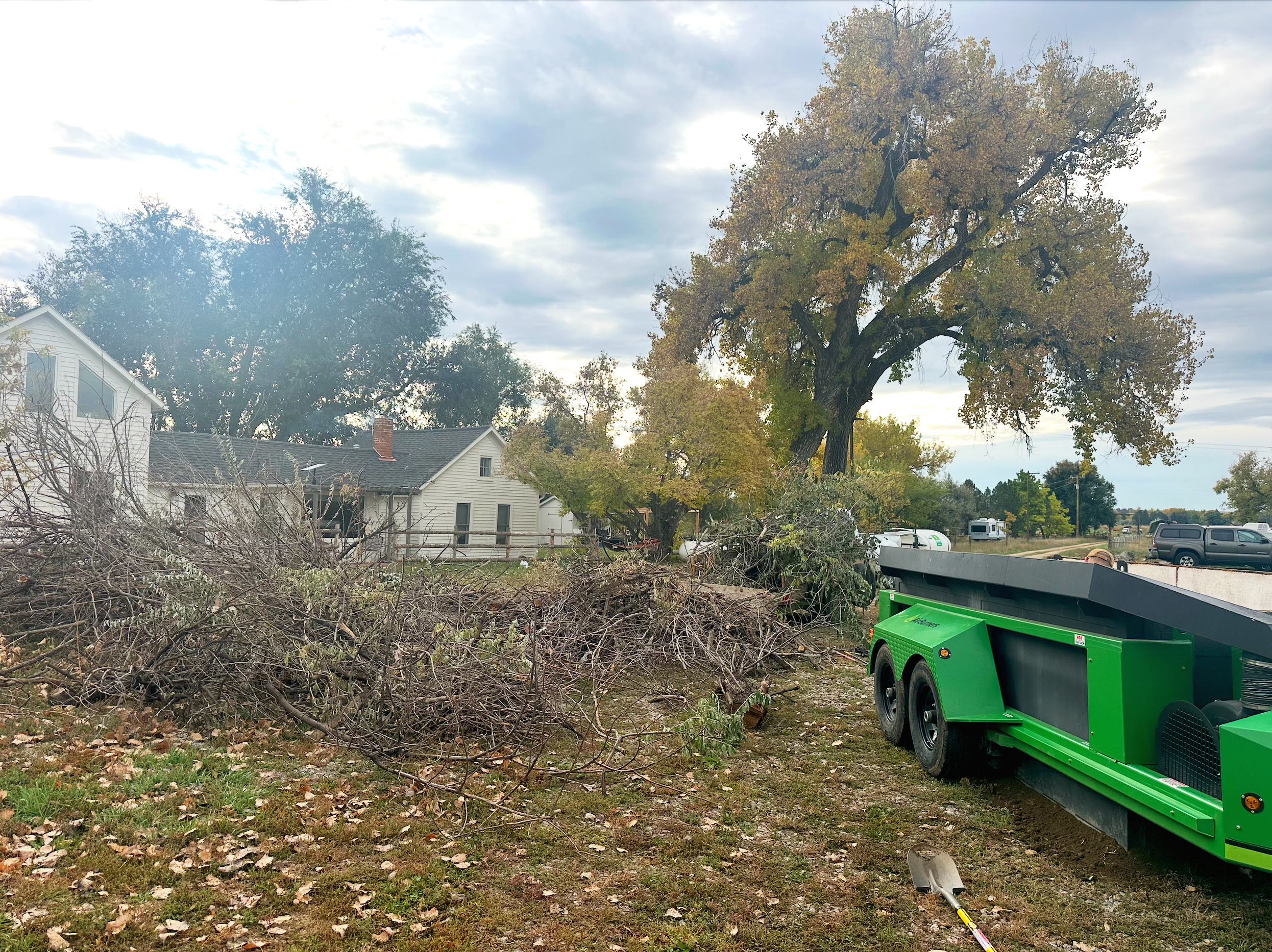
In October, a group of middle school students spent the day learning about biochar, pyrolysis, and what it looks like to take care of land in practical, hands-on ways.
The goal was simple: use existing woody debris from the property to make biochar, add it to compost, and leave the land in better shape than we found it.
The students started by helping collect and sort woody biomass from the site. This kind of material often ends up in burn piles or hauled away. Instead, they learned how it can be used as an input for making biochar through pyrolysis, a process that heats organic material in a low-oxygen environment to create a stable, carbon-rich product.
We talked about what biochar does in soil. It helps with water retention, supports microbial life, and improves nutrient availability. It also keeps a portion of carbon stored in a stable form rather than releasing it back into the atmosphere.
Then they helped run the process, observed the difference between ash and properly made biochar, and mixed the finished material into compost that will be returned to the farm’s soil.
Just as importantly, they helped clear overgrown areas and reduce accumulated woody material. That work supports basic land management and fire mitigation while creating useful material for soil building.
What stood out was how quickly the students connected the steps into a system: land management creates biomass, biomass becomes biochar, biochar improves compost, and compost improves soil. It’s a closed loop, and one they could see and participate in directly.
By the end of the day, the group had cleared part of the site, produced biochar for future use, and contributed to ongoing soil improvement work at the farm. More than anything, they got a practical look at how land stewardship, waste reduction, and soil health can be part of the same process.